EXTRA TIME TO BEAT DEADLINES - Here’s What That Actually Means
We’ve built our entire lives around a 24-hour day. Work. School. Deadlines. Sleep schedules. Time zones. But here’s the twist: the 24-hour day isn’t permanent — and it never was
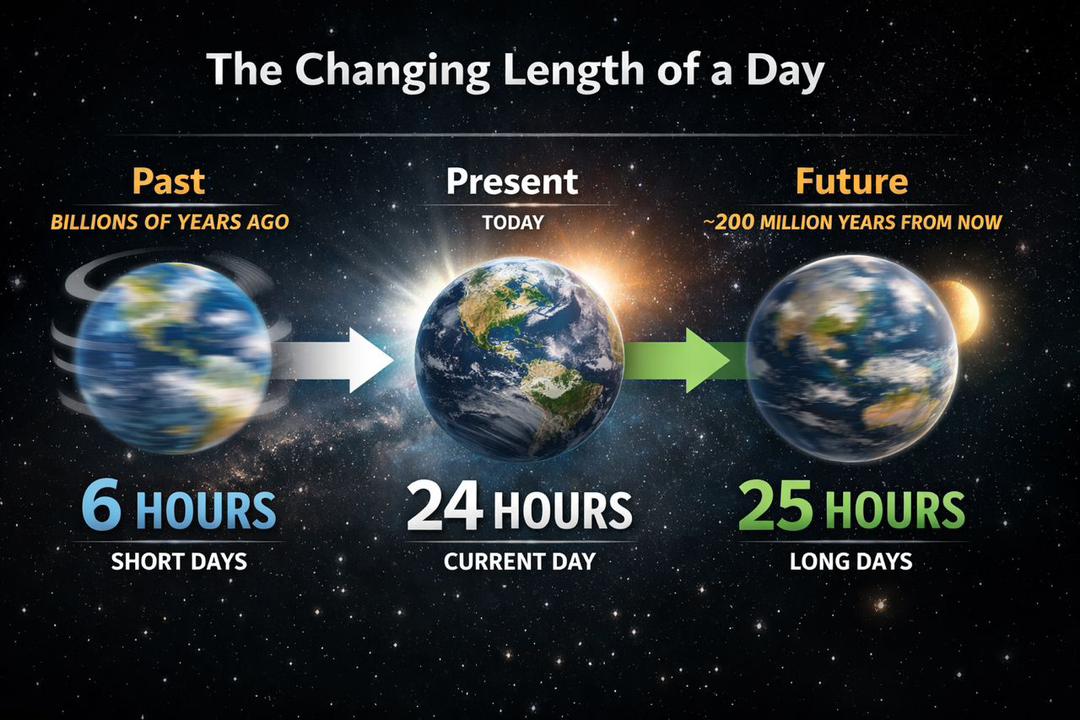
We are used to our days lasting exactly 24 hours, but science shows this wasn’t always the case. Millions of years ago, a day on Earth was much shorter, and in the very distant future, it will stretch to 25 hours.
Billions of years ago, when the Earth first formed, it spun much faster than it does today. A single day lasted just 6 to 10 hours. The Moon’s gravity pulls on Earth’s oceans, creating tides.

As Earth rotates, those tidal movements create friction — and that friction acts like a tiny brake. It’s slow. Extremely slow. 7 milliseconds per century. That’s so small you’d never notice it. Not in your lifetime. But stretch that across 200 million years? To keep time accurate, scientists use atomic clocks and occasionally add “leap seconds” to global time standards. That’s how precise modern timekeeping has become. Here’s the bigger perspective:The 24-hour day feels constant because it’s constant for us. Nothing about your schedule is changing. No extra gym time.
Written by TheGildNews Team
Comments
No comments yet. Be the first to comment.